
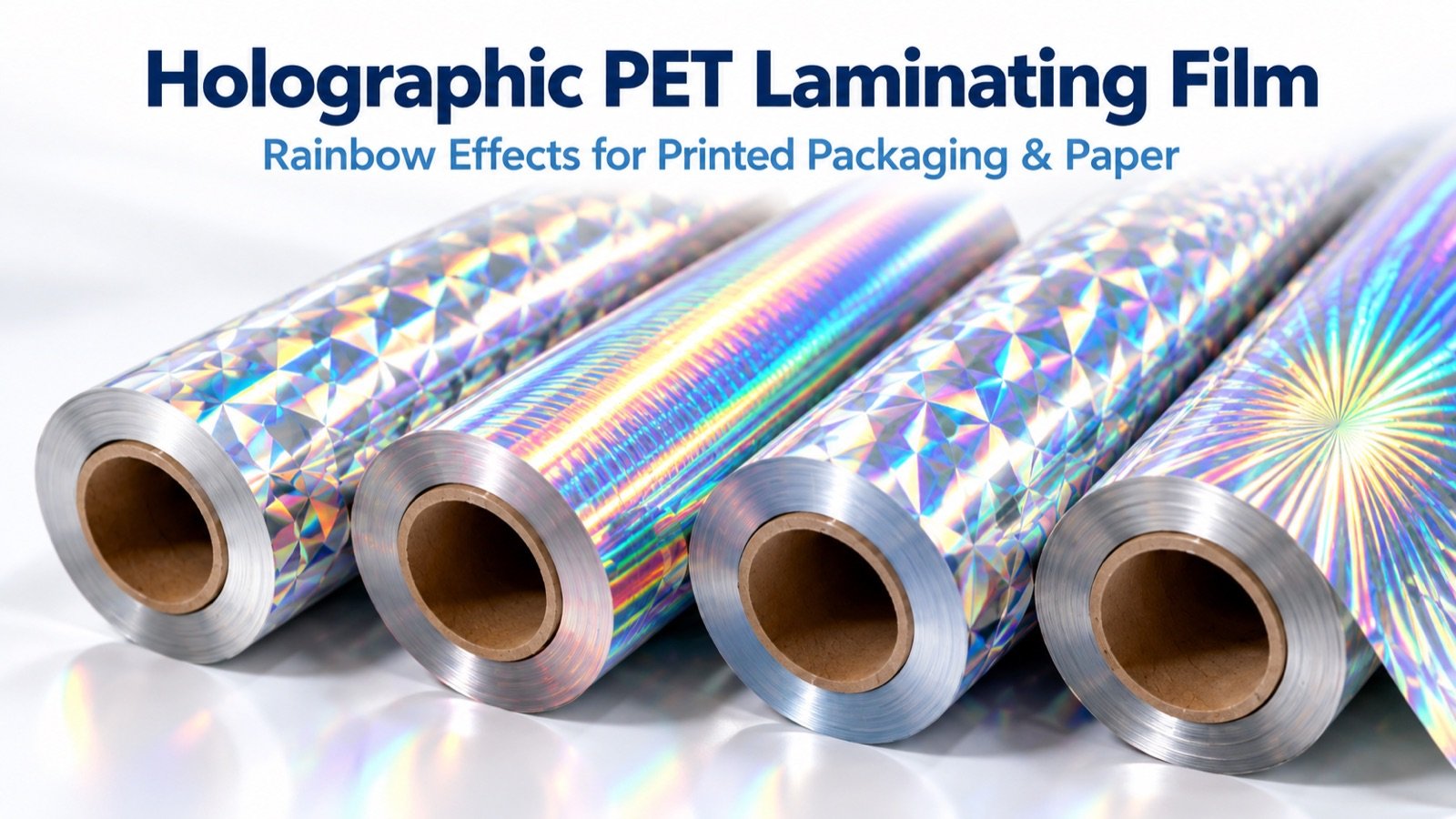
Holographic PET laminating film is used to add a shifting rainbow or dimensional optical effect to printed paper and paperboard. Unlike a colour printed with ink, the effect is created by a microscopi
Holographic PET laminating film is used to add a shifting rainbow or dimensional optical effect to printed paper and paperboard. Unlike a colour printed with ink, the effect is created by a microscopic surface pattern that redirects light.
Holographic PET Laminating Film: How Rainbow Effects Work
Holographic PET laminating film is used to add a shifting rainbow or dimensional optical effect to printed paper and paperboard. Unlike a colour printed with ink, the effect is created by a microsc…
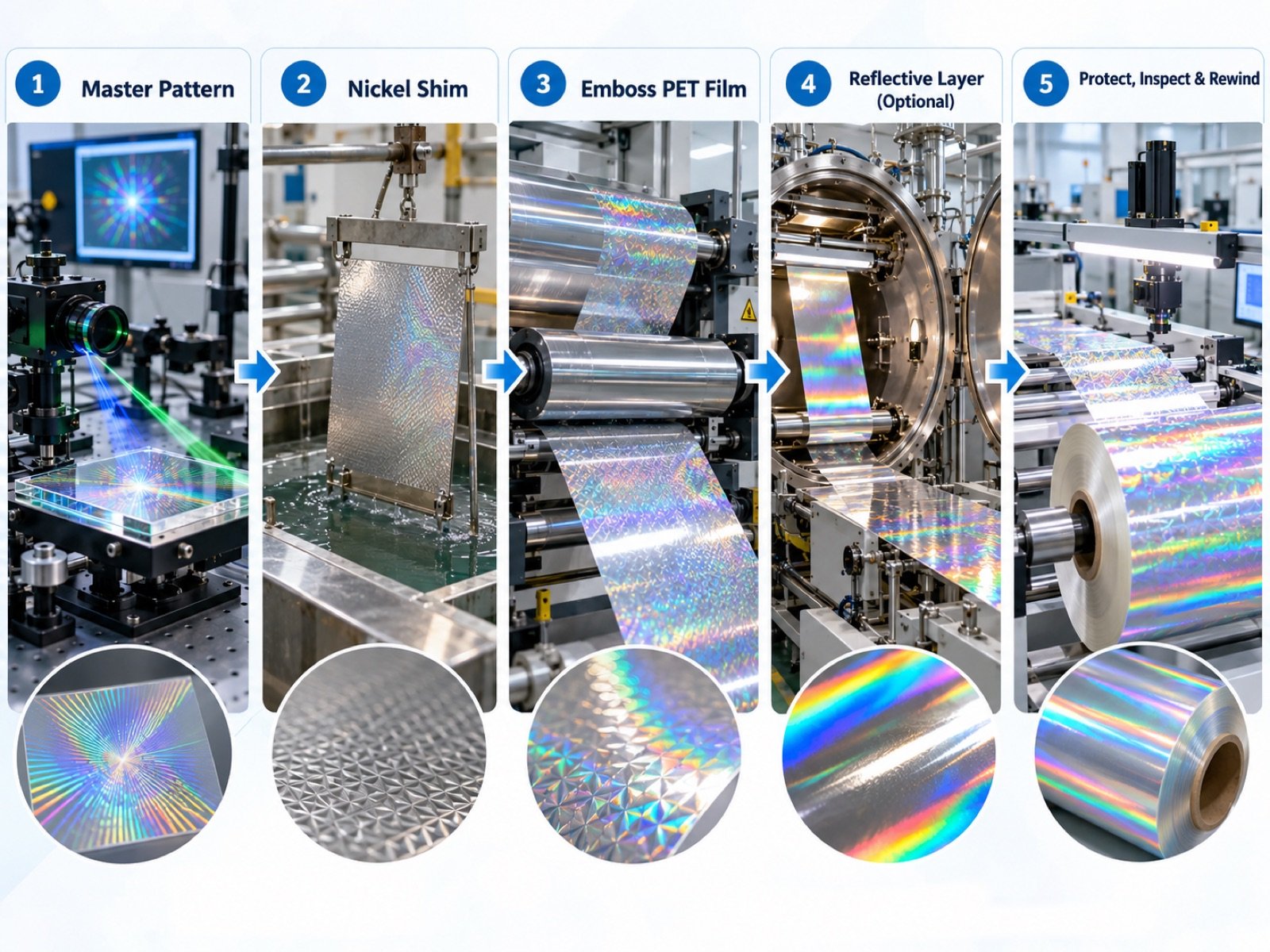
1. Create the master pattern
A holographic pattern is first recorded or formed as a microscopic relief. Laser interference is one method used to create a master, while other optical patterning methods may be used for different…
2. Make a production shim
The master can be copied into a durable metal shim, commonly nickel, so the microscopic pattern can be transferred repeatedly during production.
3. Emboss the pattern into a suitable layer
An embossing roller transfers the microscopic relief onto a suitable surface layer of the moving film. The layer must be able to take and retain the pattern under the selected processing conditions.
4. Add a reflective layer when required
Some holographic films use a thin metallized layer to strengthen the reflected rainbow effect. Other designs may rely on the embossed optical structure without metallization, so this feature should…
5. Protect, inspect and rewind
Depending on the product construction, a protective coating or a later lamination step helps protect the optical surface during handling. The film is then checked and rewound to the required roll f…
The Structure Behind the Optical Effect
A typical construction may include a PET base film, a layer carrying the embossed holographic relief, an optional reflective layer and a protective surface layer. The exact layer order and material…
Common Applications
Gift boxes and decorative folding cartons. Book covers, notebooks and presentation folders.
A distinctive optical finish
The changing rainbow effect can help packaging and printed materials stand out on a shelf or display. Different patterns create different visual impressions, from subtle shimmer to strong geometric…
Key takeaway
Holographic PET laminating film creates rainbow and dimensional effects through a microscopic optical pattern rather than ordinary ink colour. For printed packaging and paper products, the best results come from choosing a pattern that suits the artwork, confirming the film’s construction and process compatibility, and checking a laminated sample before mass production. For holographic PET laminat
Request free film samples or send your specification — we reply with a quotation within 24 hours.
Frequently Asked Questions
What buyers should know about holographic PET Laminating Film: How Rainbow Effects Work
Holographic PET laminating film is used to add a shifting rainbow or dimensional optical effect to printed paper and paperboard. Unlike a colour printed with ink, the effect is created by a microscopic surface pattern that redirects light.
What buyers should know about 1. Create the master pattern
A holographic pattern is first recorded or formed as a microscopic relief. Laser interference is one method used to create a master, while other optical patterning methods may be used for different designs.
What buyers should know about 2. Make a production shim
The master can be copied into a durable metal shim, commonly nickel, so the microscopic pattern can be transferred repeatedly during production.
Do you provide free samples?
Yes. We provide free samples of our core BOPP film grades for testing; you only cover the courier cost.
What is your MOQ and lead time?
Typically 1,000–3,000 m² per specification (about 500 kg). Standard grades usually ship within 7–15 days; samples within 1–2 working days.