
PET decorative laminating film is used to add a distinctive surface effect to printed paper and paperboard. The main differences between product types are not simply the base material, but the visual
PET decorative laminating film is used to add a distinctive surface effect to printed paper and paperboard. The main differences between product types are not simply the base material, but the visual finish and pattern: a clear gloss, a soft matte appearance, a metallic mirror effect, a holographic rainbow pattern, a fine glitter sparkle, or a textured design.
PET Decorative Laminating Film: Understanding Different Finishes
PET decorative laminating film is used to add a distinctive surface effect to printed paper and paperboard. The main differences between product types are not simply the base material, but the visu…
The Main Types of PET Decorative Laminating Film
The categories below describe decorative effects commonly discussed in laminating applications. Exact product names, constructions and processing requirements vary by supplier and grade, so samples…
1. Glossy PET Laminating Film
Glossy film gives printed materials a smooth, bright surface. It can make colours appear more vivid and create a clean, polished look.
2. Matte PET Laminating Film
Matte film reduces the mirror-like reflection of a glossy surface and gives printed materials a softer, more understated appearance. It can suit premium packaging, book covers, presentation folders…
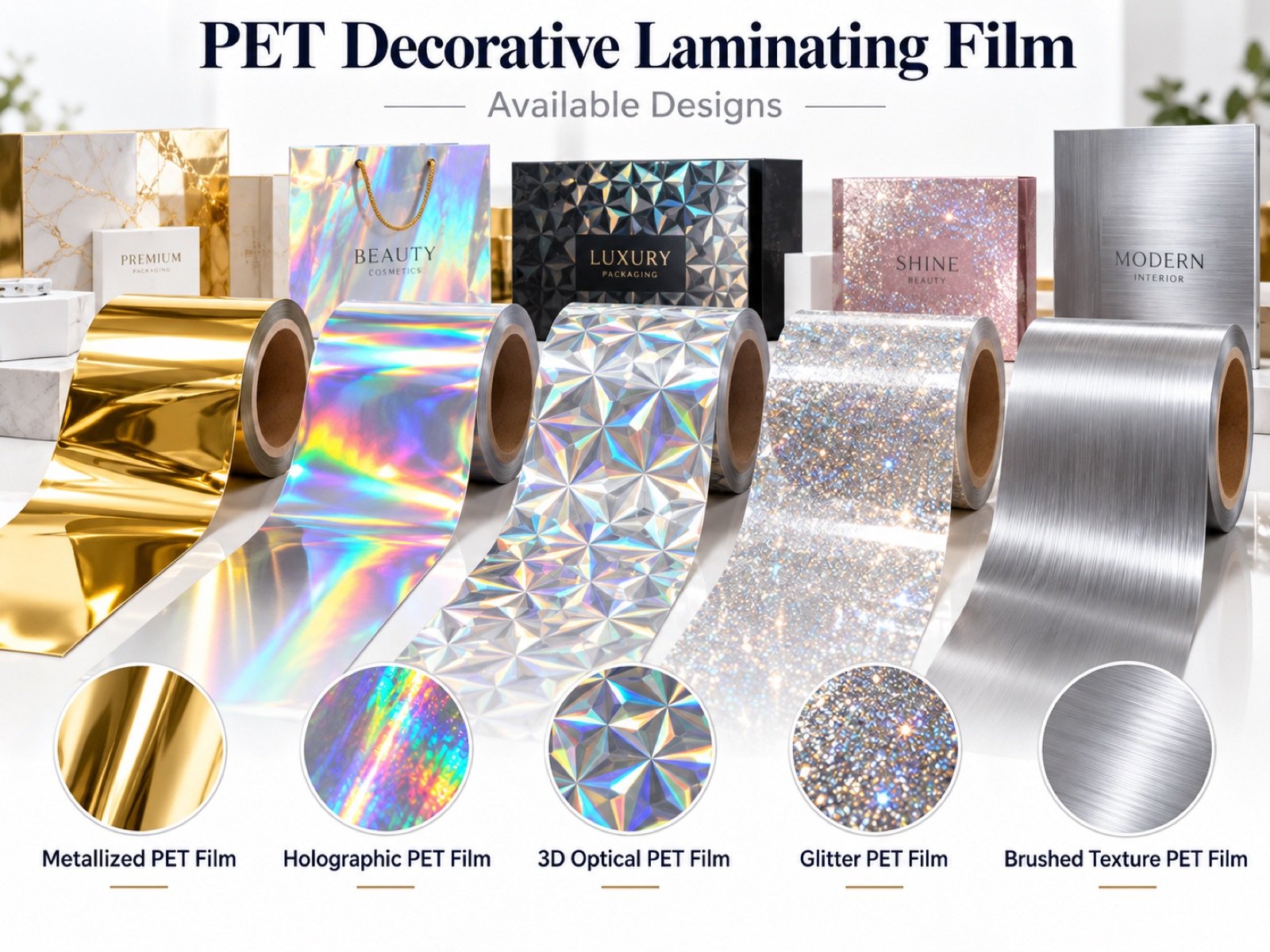
3. Metallized PET Laminating Film
Metallized film creates a metallic appearance, commonly silver or gold, with a strong reflective effect. It can help packaging look bold and premium, particularly when paired with simple graphics,…
4. Holographic (Laser) PET Laminating Film
Holographic film uses a fine optical pattern to create rainbow reflections that change with the viewing angle. Depending on the pattern, the effect may look geometric, star-like, wavy, prism-like o…
5. Glitter PET Laminating Film
Glitter film creates a sparkling surface with many fine light-catching particles. Depending on the grade, the look may be subtle and fine or more pronounced and colourful.
6. Patterned, Textured and 3D Optical PET Film
Patterned films can carry repeating geometric designs, lines, dots, diamond effects, leather-like textures or other decorative motifs. Some optical patterns create a stronger sense of depth or move…
Start with the printed design
Consider the artwork’s colours, text size, logo placement and overall style. Gloss and metallized effects can intensify visual impact; matte can reduce reflection; holographic, glitter and patterne…
Key takeaway
PET decorative laminating film is available in a range of finishes, each creating a different visual impression on printed paper and packaging. Glossy and matte films change the overall surface appearance; metallized film adds a metallic reflection; holographic film creates angle-dependent rainbow effects; glitter film adds sparkle; and patterned or 3D optical films introduce texture and visual de
Request free film samples or send your specification — we reply with a quotation within 24 hours.
Frequently Asked Questions
What buyers should know about pET Decorative Laminating Film: Understanding Different Finishes
PET decorative laminating film is used to add a distinctive surface effect to printed paper and paperboard. The main differences between product types are not simply the base material, but the visual finish and pattern: a clear gloss, a…
What buyers should know about the Main Types of PET Decorative Laminating Film
The categories below describe decorative effects commonly discussed in laminating applications. Exact product names, constructions and processing requirements vary by supplier and grade, so samples and technical specifications should be…
What buyers should know about 1. Glossy PET Laminating Film
Glossy film gives printed materials a smooth, bright surface. It can make colours appear more vivid and create a clean, polished look.
Do you provide free samples?
Yes. We provide free samples of our core BOPP film grades for testing; you only cover the courier cost.
What is your MOQ and lead time?
Typically 1,000–3,000 m² per specification (about 500 kg). Standard grades usually ship within 7–15 days; samples within 1–2 working days.