
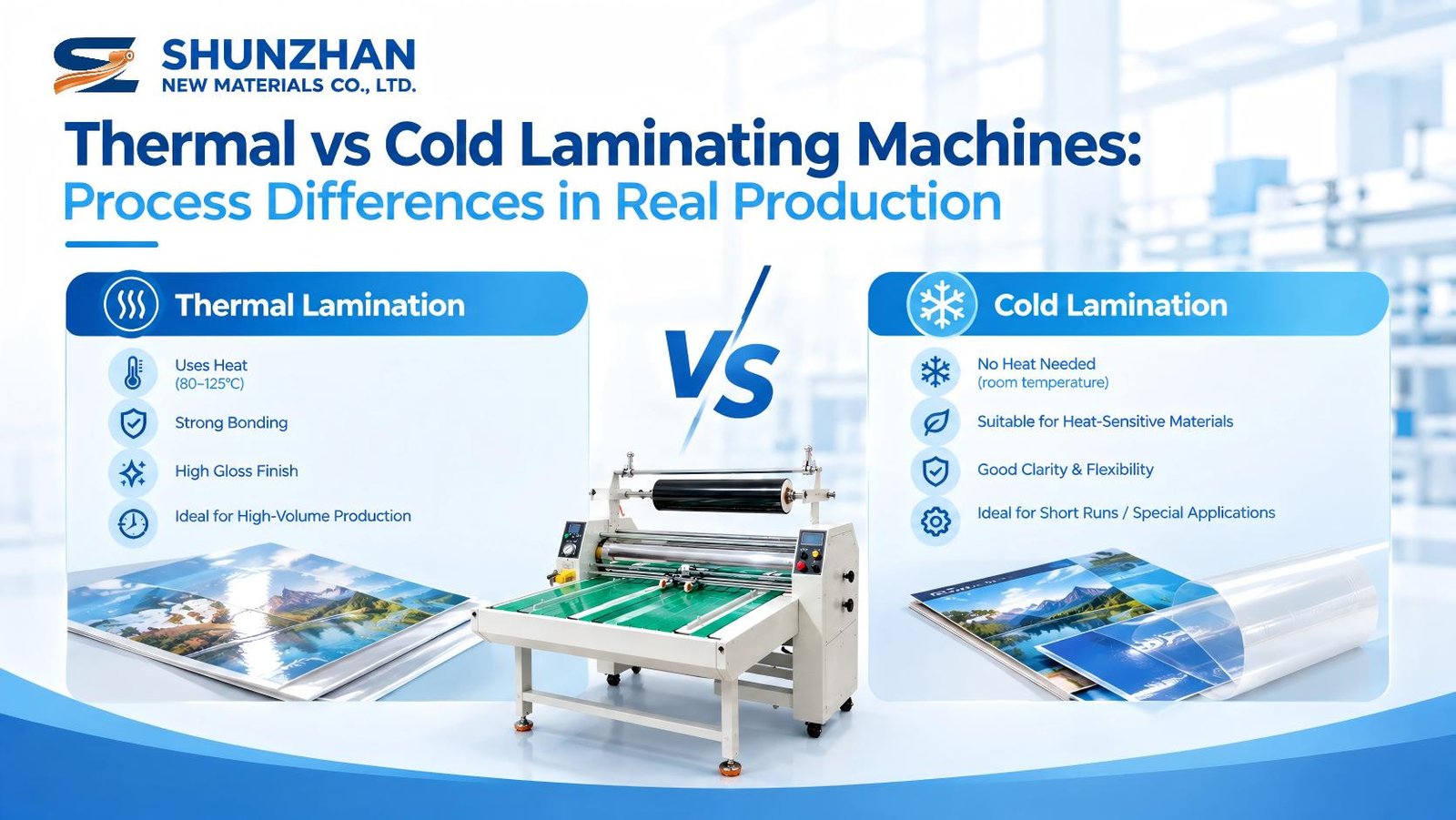
Thermal and cold lamination look similar on the finished sheet, but the machines, the films, and the daily production routine are quite different. Here is how the two processes actually run side by si
Thermal and cold lamination look similar on the finished sheet, but the machines, the films, and the daily production routine are quite different. Here is how the two processes actually run side by side.
The Core Difference in One Paragraph
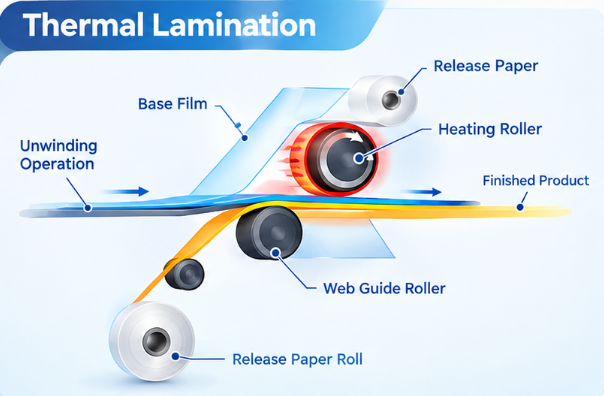
A thermal laminating machine melts a pre-coated adhesive layer that is already dried onto the film (typically EVA-based on BOPP thermal laminating film). Heat and pressure in the nip activate the a…
How Each Machine Is Built
The two machine types share an unwind station, a nip, and a rewind or delivery stack. Where they diverge: Thermal machines carry a heated roller (or heated shoe) at the nip, typically rated 80–160°…
Substrates: What Each Process Likes
Thermal lamination prefers substrates that tolerate heat and have a porous surface for the melted adhesive to key into: Paper and board: excellent bond on uncoated and coated stock. Digital output…
Adhesive: Pre-Coated vs Applied On Press
This is the deepest practical difference between the two processes. In thermal lamination, the adhesive is bought already on the film.
Temperature, Pressure, Speed: The Three Variables
Thermal lamination runs on a triangle of heat, pressure, and dwell time (a function of speed). Typical starting points for BOPP thermal film on paper: Nip temperature: 95–115°C for standard EVA adh…
Output Quality: Where Each Process Excels
Finished appearance is close — both processes deliver glossy or matte BOPP surfaces. The differences are at the edges and over time: Thermal film laminating produces a dry, immediately handleable s…
Daily Production Routine Compared
In a working shop, the difference shows up in the rhythm of the day: Warm-up: thermal machines need 5–15 minutes to reach set temperature; cold machines start immediately. Changeover between glossy…
Cost Structure: What You Are Really Paying For
Neither process is categorically cheaper. The cost profile differs: Machine cost: small sheet-fed thermal machines are generally the lower entry investment; cold/wet systems with coating and drying…
Can one machine do both thermal and cold lamination? — Some machines accept both thermal film and PSA film without a heating cycle, but dedicated machines do each job better. If you run mostly paper, a small thermal machine plus a simple cold unit is a more reliable combination than one compromise machine.
Key takeaway
Neither process is categorically cheaper. The cost profile differs: Machine cost: small sheet-fed thermal machines are generally the lower entry investment; cold/wet systems with coating and drying sections cost more at equivalent width. Film cost: thermal film carries the adhesive, so the film price is higher; cold film plus purchased adhesive usually nets out similar per square meter on commodit
Request free film samples or send your specification — we reply with a quotation within 24 hours.
Frequently Asked Questions
What buyers should know about the Core Difference in One Paragraph
A thermal laminating machine melts a pre-coated adhesive layer that is already dried onto the film (typically EVA-based on BOPP thermal laminating film). Heat and pressure in the nip activate the a…
How Each Machine Is Built?
The two machine types share an unwind station, a nip, and a rewind or delivery stack. Where they diverge: Thermal machines carry a heated roller (or heated shoe) at the nip, typically rated 80–160°…
What buyers should know about substrates: What Each Process Likes
Thermal lamination prefers substrates that tolerate heat and have a porous surface for the melted adhesive to key into: Paper and board: excellent bond on uncoated and coated stock. Digital output…
Do you provide free samples?
Yes. We provide free samples of our core BOPP film grades for testing; you only cover the courier cost.
What is your MOQ and lead time?
Typically 1,000–3,000 m² per specification (about 500 kg). Standard grades usually ship within 7–15 days; samples within 1–2 working days.